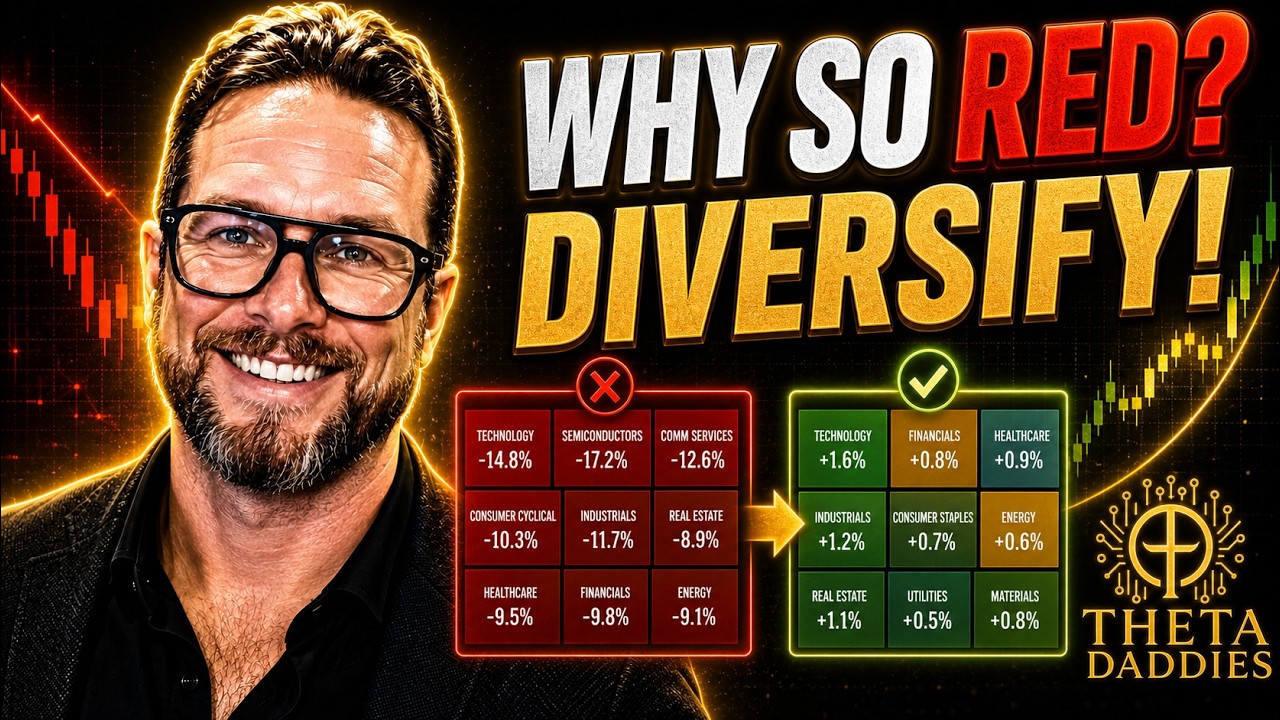
Why Diversification Matters Most When Your Portfolio Turns Red
Updated: Sep 6
When the market is green, diversification can feel boring. When everything on your screen turns red, it suddenly becomes one of the most important parts of investing. Diversification is not just owning a lot of tickers. A portfolio can have dozens of positions and still be dangerously concentrated if those companies all share the same risk. A real diversification check looks across four major categories: market cap, industry sector, geography, and growth versus value.
What Real Diversification Actually Means
Diversification is not just owning a lot of tickers. A portfolio can have dozens of positions and still be dangerously concentrated if those companies all share the same risk. A real diversification check looks across four major categories: market cap, industry sector, geography, and growth versus value.
Market Cap: The Size of What You Own
Market cap is the size of the companies you own. Large-cap stocks such as the biggest technology names tend to behave differently than small caps or speculative penny stocks. Being fully concentrated in small, volatile companies can create huge swings. Large caps are not risk-free, but they are often a more conservative foundation.
Sector Exposure: Don't Let One Theme Run the Show
Sector exposure is another major piece. If your portfolio is packed with data center, AI, chip, space, or other high-growth themes, a single sector selloff can make it feel like the entire market is collapsing. In reality, the damage may be concentrated in the parts of the market you own most heavily.
Geography: Where Is Your Portfolio Actually Concentrated?
Geography matters too. A portfolio made entirely of U.S. stocks is exposed to different risks than one that includes companies from Asia, Latin America, Europe, or other regions. Global companies may already provide some international exposure, but it is still worth knowing where your portfolio is actually concentrated.
Growth vs. Value: Watch Your Beta
The final category is growth versus value, often reflected through beta. Stocks with a beta above one typically move more aggressively than the broader market. That can be exciting on the way up and brutal on the way down. If high-beta names become too large a part of your portfolio, volatility becomes the main character.
How to Fix an Unbalanced Portfolio
So how do you fix it? A simple starting point for many investors is a broad, low-cost index approach, such as a classic three-fund portfolio. From there, individual stocks or higher-growth themes can be added intentionally, but the goal is to avoid becoming lopsided in any single area.
When parts of the market fall hard, there may also be opportunities to rotate. Some investors use strategies such as tax-loss harvesting, moving from one beaten-down equity into another while improving the overall balance of the portfolio. That is not financial or tax advice, but it is a useful concept to understand and discuss with a professional if it applies to your situation.
The Power of Scheduled Rebalancing
The most important habit is scheduled rebalancing. Pick a cadence, such as quarterly, and review whether your portfolio still matches the allocation you actually want. If high-beta stocks doubled and now dominate your account, trimming back to your target allocation can be a rational, objective decision instead of an emotional guess.
Humans are notoriously bad at picking perfect exits. A schedule helps remove some of that emotion. It turns diversification from a vague idea into a repeatable process.
The Bottom Line
The lesson is simple: check your diversification when things feel great, not only after the pain shows up. The next selloff will expose the weak spots in your portfolio. The goal is to know those weak spots before the market points them out for you.
This is not financial advice or tax advice. It is a framework for thinking clearly about portfolio risk before volatility does the teaching.